





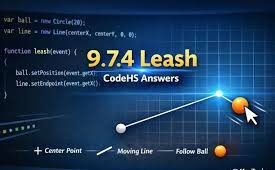
Introduction to 9.7 4 leash codehs
Are you ready to elevate your coding skills? If you’re venturing into the world of CodeHS, you’ve likely stumbled upon the 9.7 4 leash codehs challenge. This exercise is not just another checkbox on your learning journey; it’s a critical stepping stone in understanding programming concepts that will serve you well beyond this platform. Whether you’re a newbie or looking to refine your existing knowledge, mastering this task can unlock new doors for your tech journey. Let’s dive in and explore everything you need to know about the 9.7 4 leash codehs!
Understanding the Basics of Leash Codehs
Leash Codehs is a vital component for managing your coding projects. It offers a structured way to visualize and control program flow. Understanding its fundamentals can significantly enhance your programming skills.
At its core, Leash Codehs operates on simple commands that guide the execution of code. Each command acts like a leash, directing the behavior of elements within your project.
Familiarizing yourself with these basic constructs is essential. They help in organizing tasks efficiently while ensuring clarity in logic development.
Engaging with Leash Codehs allows coders to streamline their workflow and avoid common pitfalls associated with complex projects. The right application can transform chaotic code into something manageable and understandable, paving the way for smoother debugging processes down the line.
As you delve deeper, you’ll discover how versatile this tool really is in various contexts of coding challenges and solutions.
Benefits of Using 9.7 4 leash codehs
Using 9.7 4 leash codehs brings numerous advantages to your programming projects. It enhances organization by allowing you to manage complex tasks efficiently.
With a clear structure, your code becomes more readable and maintainable. This helps both you and others who may work on the project later.
Additionally, implementing this leash system can improve debugging processes. It allows for quicker identification of issues within the code since everything is neatly compartmentalized.
Another perk is increased collaboration among team members. When everyone understands how to utilize the leash structure, teamwork flows smoothly.
Moreover, it promotes best practices in coding habits from an early stage. Learning these principles can benefit new developers significantly as they progress in their careers.
How to Use 9.7 4 leash codehs Effectively
To use 9.7 4 leash codehs effectively, start by familiarizing yourself with the interface. Spend some time navigating through its features and understanding how each function operates.
Next, create a clear plan before diving into coding. Outline your goals and what you want to achieve with the project. This will help keep your focus sharp.
As you write code, regularly test small sections for functionality. This makes it easier to catch errors early on, which saves time in the long run.
Don’t hesitate to utilize available resources like tutorials or forums specific to leash codehs. Engaging with community members can provide valuable insights that enhance your learning experience.
Practice consistently. The more you engage with 9.7 4 leash codehs, the more proficient you’ll become over time in using its tools efficiently and creatively.
Common Mistakes to Avoid when Using 9.7 4 leash codehs
When diving into 9.7 4 leash codehs, it’s easy to trip over some common pitfalls. One major mistake is neglecting to read the instructions thoroughly. Rushing through can lead to misunderstandings and errors in implementation.
Another frequent error involves disregarding variable naming conventions. Clear and consistent names help both you and others understand your code better.
Failing to test incrementally can also cause big headaches later on. It’s wise to check your work periodically as you build rather than waiting until everything’s complete.
Overlooking comments in your code is a missed opportunity for clarity. Adding notes will support future revisions or help anyone else who might look at it down the line.
Avoiding these mistakes will streamline your experience with 9.7 4 leash codehs significantly.
Troubleshooting and Tips for Successful Implementation
Troubleshooting 9.7 4 leash codehs can seem daunting, but a few strategies can simplify the process. First, check for syntax errors in your code. Even a small typo can lead to unexpected behavior.
Next, ensure that you’re using the correct data types and structures. Mismatched types often cause issues that are hard to trace.
If you encounter performance problems, consider optimizing your loops or functions. Look for any unnecessary calculations or redundant processes within your code.
Another tip is to leverage comments extensively while coding. This practice makes it easier to track down where things might be going wrong later on.
Don’t hesitate to utilize forums or community resources dedicated to CodeHS challenges. Engaging with others who have faced similar hurdles can provide valuable insights and solutions you might not have considered yet.
Conclusion: Why You Should Incorporate 9
Incorporating 9.7 4 leash codehs into your coding toolkit can significantly enhance your programming experience. This resource opens doors to better understanding and implementing coding concepts effectively. It offers a solid foundation for both beginners and experienced coders alike.
By leveraging the benefits outlined, you can streamline your learning process and avoid common pitfalls that often hinder progress. Embracing this tool will not only improve your skills but also increase confidence in tackling complex projects.
As you navigate through different coding challenges, the insights gained from using 9.7 4 leash codehs will be invaluable. The ability to troubleshoot efficiently while applying best practices ensures you remain on an upward trajectory in your programming journey.
Make it part of your routine, explore its features, and watch as it transforms how you approach coding tasks moving forward!