



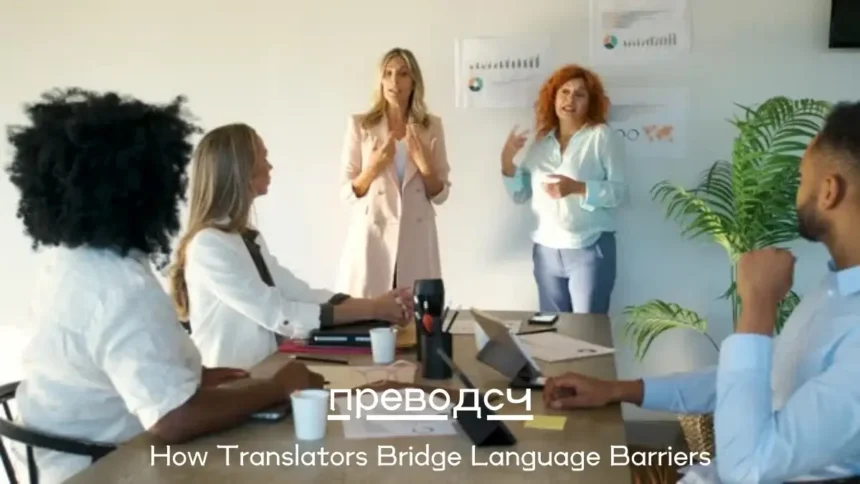
Introduction to преводсч and Its Significance
Language is a beautiful tapestry woven with the threads of culture, history, and human connection. But what happens when two people from different linguistic backgrounds meet? This is where преводсч comes into play. Translators are not just wordsmiths; they are cultural navigators who bridge gaps between diverse societies. Their work unlocks doors to understanding, enabling communication that transcends borders.
In our ever-globalizing world, the significance of преводсч cannot be overstated. As businesses expand internationally and individuals seek connections beyond their native tongues, translators become essential players in fostering dialogue and collaboration. They carry the weight of meaning across languages while ensuring that nuances don’t get lost in translation.
Join us as we delve deeper into this fascinating field! Explore how these language experts navigate challenges and employ strategies to make effective translations happen—ultimately revealing how important it is for them to understand cultures deeply. From technological advancements shaping their craft to predictions about where the industry is heading, let’s unveil the art of преводсч together!
The Role of a преводсч
The преводсч plays a crucial role in today’s interconnected world. They are not just word converters; they are cultural mediators.
A skilled преводсч understands nuances, idioms, and context. This ensures that the message retains its original meaning while appealing to the target audience.
Their work spans various fields including literature, medicine, law, and technology. Each domain requires specialized knowledge to ensure accuracy.
Moreover, a перевoдсч facilitates communication between individuals from different backgrounds. They open doors for collaboration and understanding where language could otherwise create barriers.
By transforming text or speech into another language, they empower businesses and foster relationships across borders. Their expertise can significantly impact global outreach for companies looking to expand their markets.
In essence, the перевodsch is an invaluable asset in bridging gaps and enabling dialogue among diverse populations.
Challenges Faced by преводсч
Translators often find themselves navigating a labyrinth of challenges. One major hurdle is dealing with idiomatic expressions. These phrases can be deeply rooted in culture, making them difficult to convey accurately.
Another significant challenge lies in maintaining the context. A word’s meaning can shift dramatically based on its usage within a sentence. This requires translators to possess not only linguistic skills but also an acute awareness of nuance.
Time constraints add another layer of complexity. Many projects come with tight deadlines, forcing translators to balance speed and accuracy under pressure.
Staying updated with language evolution presents ongoing difficulty. Languages are living entities that constantly change; new slang and terms emerge regularly, demanding that translators continuously adapt their knowledge base.
Strategies for Effective преводсч
Effective преводсч requires a blend of skill, intuition, and strategy. One key approach is to understand the context thoroughly. Every text has nuances that shape its meaning.
Utilizing glossaries can enhance accuracy. A well-prepared glossary ensures consistent terminology throughout the translation process. This practice helps avoid potential misinterpretations.
Another important strategy involves reading extensively in both source and target languages. Familiarity with idiomatic expressions enriches a translator’s toolkit, making translations more relatable.
Collaboration also plays a crucial role in achieving high-quality results. Engaging peers for feedback can unveil blind spots and inspire innovative solutions to complex challenges.
Continuous learning is vital in this ever-evolving field. Staying updated on language trends or attending workshops sharpens skills and broadens perspectives, enhancing overall effectiveness in преводсч tasks.
Importance of Cultural Understanding in преводсч
Cultural understanding is crucial in the realm of преводсч. Language isn’t just a collection of words; it carries traditions, emotions, and nuances unique to each culture.
A skilled translator must navigate these intricacies. Literal translations can often miss the mark if cultural context is overlooked. For instance, idiomatic expressions may hold little meaning outside their native culture.
Familiarity with customs and social norms enriches the translation process. Understanding regional dialects enhances accuracy and relatability for target audiences.
Moreover, cultural sensitivity fosters trust between parties involved. It allows for deeper connections that go beyond mere communication.
Translators who embrace this aspect are better equipped to convey messages authentically. They become ambassadors of not just language but also rich cultural tapestries woven into each phrase they translate.
Advancements in Traпреводсч slation Technology
The landscape of преводсч is rapidly evolving thanks to technological advancements. Machine learning and artificial intelligence are transforming how translations are produced. These innovations enhance speed and accuracy, making it possible for businesses to reach global audiences effortlessly.
Tools like neural machine translation (NMT) have taken center stage. They analyze vast amounts of language data, improving contextual understanding and fluency in translated text. This means fewer awkward phrases and more natural-sounding sentences.
Moreover, cloud-based platforms allow for real-time collaboration among translators from different parts of the world. Gone are the days when teams had to work in isolation; now they can share insights instantly.
Mobile applications also make переводсч accessible at our fingertips. Travelers often rely on these tools for quick translations on-the-go, bridging gaps between cultures seamlessly. As technology continues to advance, the future looks promising for both professional translators and casual users alike.
The Future of преводсч
As the world becomes increasingly interconnected, the future of преводсч looks promising. Innovations in artificial intelligence and machine learning are reshaping how translations are performed. These technologies can analyze vast amounts of data quickly, often enhancing accuracy.
However, human touch remains irreplaceable. Nuances in emotion and cultural context are elements that machines struggle to grasp fully. This highlights a growing need for skilled преводсч who can interpret not just words but feelings.
Furthermore, as global communication expands through platforms like social media and virtual meetings, the demand for real-time translation is skyrocketing. The evolution of remote work also emphasizes this need across various industries.
Incorporating augmented reality (AR) could further revolutionize how we understand languages on-the-go. Imagine translating signs or menus instantly while exploring new places—an exciting prospect indeed!
Conclusion
The art of преводсч is an intricate dance between languages, cultures, and meanings. As we navigate through diverse linguistic landscapes, the importance of skilled translators becomes increasingly clear. They not only facilitate communication but also foster understanding and collaboration across borders.
Translators face challenges that demand adaptability and creativity. From idiomatic expressions to regional dialects, each project comes with its unique hurdles. However, by employing effective strategies—such as thorough research and leveraging technology—they can enhance their craft.
Cultural nuances play a pivotal role in преводсч. A translator’s ability to grasp these subtleties ensures that messages resonate authentically with target audiences. This cultural insight enriches translation work considerably.
Advancements in translation technology are reshaping the field. Machine translation tools continue to improve efficiency while human expertise remains invaluable for nuanced texts. The future holds exciting possibilities as these two elements will likely coexist harmoniously.
As we look ahead, the realm of переведсч is set for transformation yet again. Embracing innovation while preserving authenticity will be key in this evolving landscape where language barriers can become bridges instead.
With every translated word, we come one step closer to a more interconnected world—a goal worth striving for together.